

From Efficiency Tool to Brand Signature: How HaiSheng Commercial Automatic Sushi Rotating Equipment Transforms Restaurant Identity
When Equipment Becomes Part of the Brand
Opening a conveyor belt sushi restaurant is no longer as simple as "buying a few conveyor belts and setting up some tables." In prime locations where space comes at a premium, amid rising labor costs, and in a market where consumers increasingly demand exceptional dining experiences, equipment selection directly determines a restaurant's profitability and brand image.
HaiSheng Intelligent Technology Co., Ltd. understands this shift deeply. As a specialized equipment manufacturer with 16 years of experience, the company operates a 10,000-square-meter manufacturing facility backed by a technical engineering team of over 100 professionals. By combining Japanese craftsmanship with innovative design, HaiSheng creates Commercial Automatic Sushi Rotating Equipment that seamlessly blends efficiency with aesthetics, helping restaurant brands establish differentiated competitive advantages across more than 20 countries and regions worldwide.
Visual Appeal: Transforming the Conveyor Belt into a Living Billboard
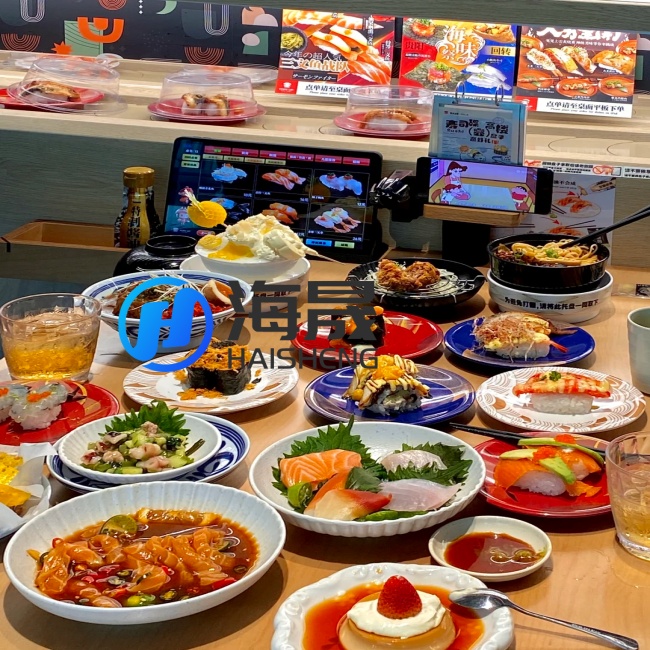
In the traditional conveyor belt sushi model, the rotating belt itself serves as a powerful marketing tool. Colorful plates of sushi continuously circulate, naturally capturing customers' attention and stimulating their appetite. This "visual food show" not only alleviates the anxiety of waiting but also acts as a living advertisement that draws passersby into the restaurant.
HaiSheng's Rotating Sushi Equipment preserves this classic appeal while incorporating comprehensive upgrades. The dual-layer stable frame structure ensures smooth, vibration-free operation. The acrylic silent chain delivers a quiet, comfortable dining environment. The modular design allows the equipment to adapt to various spatial layouts—whether a standard rectangular restaurant or unconventional L-shaped and U-shaped spaces, HaiSheng can create visually open, logically flowing conveyor configurations through flexible combinations.
For restaurants located in prime, high-rent locations, this visual appeal is especially critical. High rent demands high table turnover, and a vibrant, smoothly operating conveyor belt is precisely what attracts customers to sit down, enjoy their meal efficiently, and leave satisfied.
Shinkansen-Style Express Lanes: From Delivery to Performance
If the conveyor belt serves as a restaurant's "static billboard," then the Shinkansen-style express lane delivery system represents its "dynamic performance."
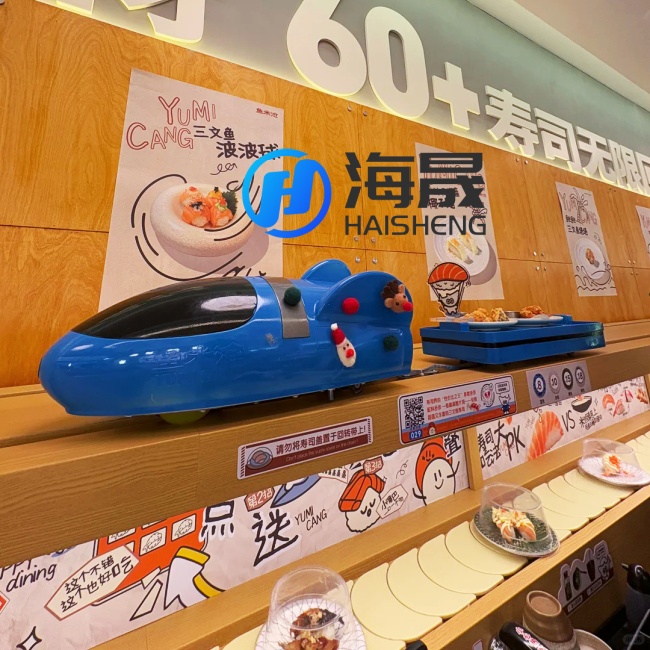
HaiSheng's variable-track delivery technology transforms delivery vehicles from simple transport mechanisms into integral elements of the dining experience. Smart delivery vehicles—customizable as trains, spaceships, or other branded IP characters—travel precisely along dedicated tracks, automatically switching lanes at intersections to deliver food accurately to designated seats. Throughout this process, customers are not merely recipients of food but spectators of a carefully orchestrated delivery performance.
This "theatrical" delivery experience has inherent advantages in the age of social media. When customers watch a miniature train carrying sushi swiftly approach their table, they instinctively reach for their phones to capture and share the moment. Each share represents free brand exposure. This lies at the heart of the "eatertainment" trend—creating a restaurant that offers not just a meal, but a space for photography, sharing, and lasting memories.
Hybrid Model: The Optimal Balance of Efficiency and Experience
The mainstream configuration in modern conveyor belt sushi restaurants is the "dual-track" hybrid model: the lower level retains the traditional conveyor belt, maintaining visual richness and allowing customers the convenience of spontaneous selection; the upper level features high-speed express delivery vehicles for precise, point-to-point service.
This model's value lies in its ability to satisfy different types of customers simultaneously. Those who enjoy serendipitous discovery can select sushi directly from the rotating belt, experiencing the pleasure of browsing. Those with specific preferences can order via tablet and have freshly prepared dishes delivered directly by express vehicles.
More importantly, this hybrid approach effectively addresses the most significant challenge in traditional conveyor belt sushi—food waste. In conventional setups, the belt must remain fully stocked to maintain visual appeal, inevitably resulting in unsold plates being discarded. In the hybrid model, high-value or highly perishable items (such as sashimi, carbonated beverages, and frozen desserts) are delivered directly via express vehicles rather than circulating endlessly on the belt, reducing waste to near zero. For restaurant brands entering markets like Europe and North America—where strict food safety standards and high ingredient costs make waste reduction essential to profitability—this advantage is particularly significant.
Technology Empowerment: From Labor-Intensive to Technology-Driven
As the restaurant industry grapples with persistent labor shortages and rising wages, the value of automation has become increasingly evident. HaiSheng's Commercial Automatic Sushi Rotating Equipment transforms traditionally labor-intensive front-of-house operations into a semi-self-service model. Customers order through smart tablets, delivery vehicles bring dishes to tables, and the plate collection system automatically tracks consumption and processes payments. The entire workflow proceeds without constant staff intervention.
This approach yields not only labor cost savings but also operational efficiency gains. A single staff member can serve multiple tables simultaneously, transitioning from a "runner" role to a "host" role, dedicating more attention to customer service and table maintenance. For small-scale operators seeking to maximize productivity with lean teams, or for chain brands aiming to keep labor costs within manageable limits, this technology-driven model represents an ideal solution.
International Certifications: The Foundation of Brand Trust
For restaurant brands planning to expand into overseas markets, equipment safety certifications are an essential requirement. HaiSheng's Rotating Sushi Equipment has earned multiple internationally recognized certifications, including CE for the European market, NSF for food safety compliance, and UL for electrical safety in North America. These credentials serve not only as proof of product quality but also as the foundation of brand trust.
When a restaurant opens in a foreign market, customers may not recognize the equipment manufacturer behind it, but they will experience consistent food quality and a safe dining environment. This represents the invisible contribution equipment suppliers make to a restaurant's brand image.
Conclusion
From efficiency tool to brand signature, HaiSheng Intelligent Technology Co., Ltd. has witnessed the evolving role of conveyor belt sushi equipment over 16 years. In the future restaurant landscape, equipment will no longer function merely as silent support infrastructure but will become an integral part of a restaurant's brand identity. Whether attracting customers through visual appeal, generating social media engagement with smart delivery vehicles, or enabling efficient operations through automation, a well-designed Commercial Automatic Sushi Rotating Equipment system represents one of the most worthwhile investments any restaurant operator can make.